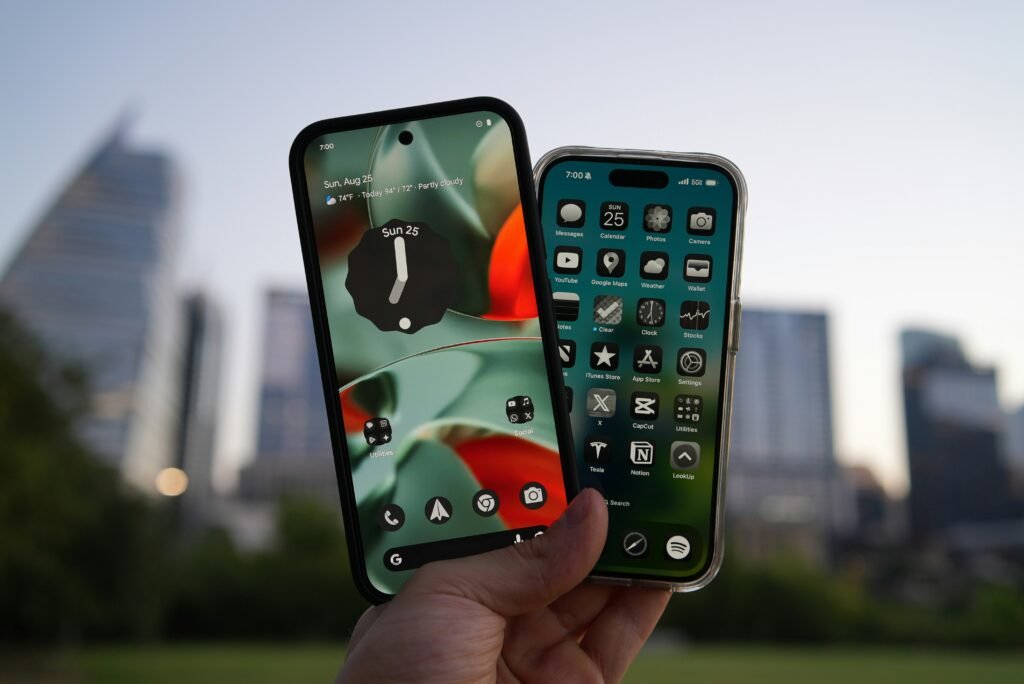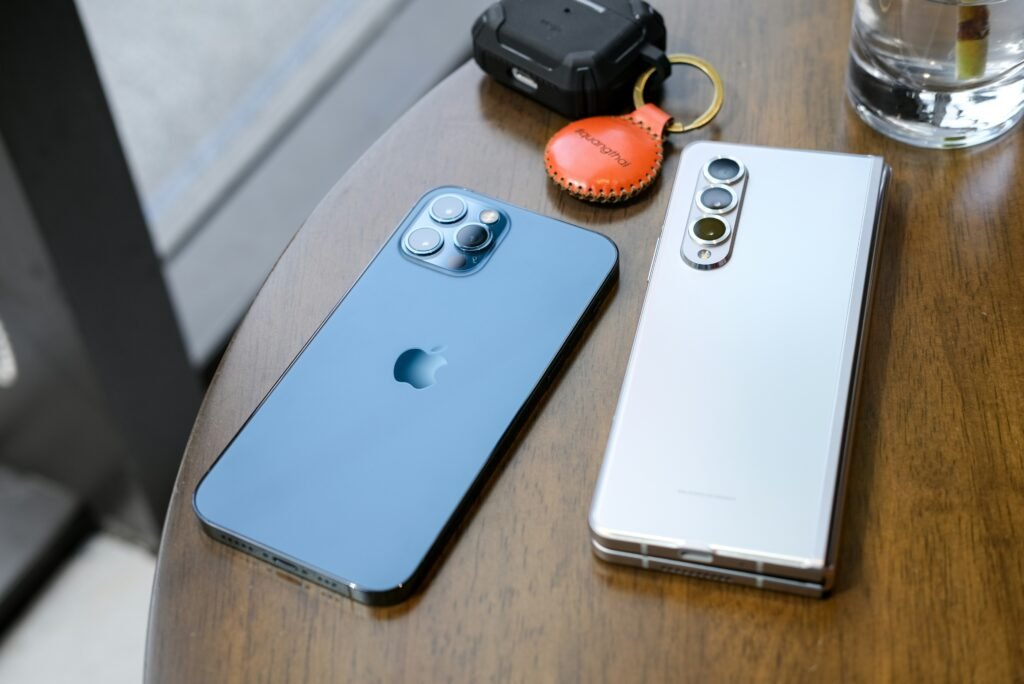
Ignore the “mAh” specs. They are lying to you. From standby drain to charging speeds, here is the real-world battery comparison between Apple and Samsung.
iPhone vs Samsung Galaxy: Battery Life Comparison (The Real Truth)
Always stuck in repeat mode, that marketing tune. Same old story every single time around.
That sign outside shouts about power lasting forever. It claims your device won’t quit on you. So you hand over cash, start using it daily. By evening light, though, you’re stuck near taps and glasses, staring at a warning glow—plugging into whatever socket you can find.
Truthfully, they never lied. They just ran tests in a quiet room where zero interference exists. Out here, signals struggle. Towers shift mid-call. Screens blast full bright under harsh sunlight.
Funny thing happens when you stop reading the manual. The real story shows up. Watch what the iPhone does when the battery gets low. See how it holds on. Now shift to the Samsung Galaxy doing its own dance under pressure. One fights to stay steady. The other reshapes speed based on hidden needs.
At BinarySpur, we ignore the spec sheet. We look at the chemistry. Here is the actual difference between how an iPhone and a Samsung Galaxy handle power.
The “mAh” Myth Most people think a bigger battery number (mAh) means longer life. This is false.
Samsung often has bigger batteries (5000mAh) because Android is less efficient.
iPhone often has smaller batteries (3000-4000mAh) because iOS is hyper-optimized.
Result: A smaller tank with a better engine often wins.
Quick Summary: The Winner Breakdown
Standby Time: iPhone Wins. It sips power when locked.
Charging Speed: Samsung Wins. It fills up in half the time.
Heavy Usage: Tie. Gaming and 5G kill both equally fast.
Long-Term Health: iPhone Wins. Slower charging preserves chemistry.
1. The “Idle” Game (Where iPhone Wins)
The moment you see it, things feel different every day. Your phone sits on the nightstand, fully charged. Eight hours pass before morning comes.
-
iPhone: Battery shows 98%.
-
Samsung: Battery shows 92%.
The Reason: Frozen by design, Apple’s tight grip on both parts means less chatter inside. Shutting down an iPhone feels like turning off a light—sudden quiet. Most tasks halt dead. Samsung runs looser, letting apps stir when unseen. Background noise lingers through Google’s endless check-ins. Energy slips away even at rest. Bigger battery, sure—but tiny losses add up, like a slow drip from a tap left running.
2. The Charging Race (Where Samsung Wins)
Power’s out on your device. Fifteen minutes until you walk out the door.
-
iPhone: Charging your iPhone feels slow sometimes. Fifteen minutes pass. The battery jumps to 20%. That moment? It catches your breath.
-
Samsung: Plugged into a 45-watt charger, Samsung powers up fast. In just a quarter of an hour, half the battery fills. That kind of speed brings peace of mind.
The Reason: Fear of overheating drives Apple’s choices. Charging stays slow—often between 20W and 27W—not by accident but design. Heat harms batteries, so they hold back. Samsung takes another path entirely. Speed wins here. Some Ultra phones accept power as high as 45W. Faster fills come at a cost, though. Longevity gives way to quick top-ups.
3. The “Heavy Load” Reality
Try running something intense. Open a demanding 3D title—Genshin Impact, for example—or start trimming footage in 4K resolution. What changes then?
The Result: Tie. A tie decides it. When power surges, heat follows. Each device runs hot under load. More heat means more electrical pushback. That pushback weakens the battery fast. It does not matter if the chip inside is called A17 Bionic or Snapdragon Gen 3. Heavy work eats up charge within five hours, sometimes less. Tweaks in code cannot beat what physics demands.
4. The 3-Year Horizon (Degradation)
This phone stays with you till 2028. What kind of battery holds up? Still working after years—what makes it last?
The Winner: iPhone. A phone made by Apple takes the lead. Charging at a reduced speed means less strain on the lithium-ion parts, thanks to the company’s design choice. Faster top-ups from Samsung bring higher temperatures along. Those rising temps push the fluid inside the battery toward forming crystals sooner.
-
iPhone: After two full years, could still hold close to 90%.
-
Samsung: Charged quickly every single day, may drop to about 85%.
Final Thoughts: Pick Your Poison
Your worry has its own rhythm. That shapes how you feel.
-
Do you hate ghost drain? Wonder why that happens? It turns out just owning an iPhone changes things.
-
Do you hate waiting? Imagine charging your phone fast enough to leave the charger behind. That kind of speed comes with Samsung.
Not sorcery inside. Just choices made real.
Frequently Asked Questions
Does Dark Mode save battery on both?
True enough. These days, iPhones along with Samsung phones rely on OLED displays. When Dark Mode kicks in, the black parts of the screen go fully dark. That switch cuts power use by roughly 15% to 20% across either phone.
Should I use the “Limit to 80%” feature?
Right. This function exists on both devices—called “Optimized Charging” for iPhones and “Protect Battery” on Samsungs. For anyone using their phone beyond a couple of years, it makes sense to enable it. The system avoids keeping the charge maxed out constantly, which speeds up wear inside the battery.
Why does my new phone drain fast?
Right off the start, those phones lose power fast—first two days are rough. That’s because they’re sorting through everything: pictures, messages, documents, getting search ready (“indexing”). It runs quietly while you do other things. Wait a full 48 hours. Then see how long the charge really lasts.
Have Any Question? Feel Free To Ask: